

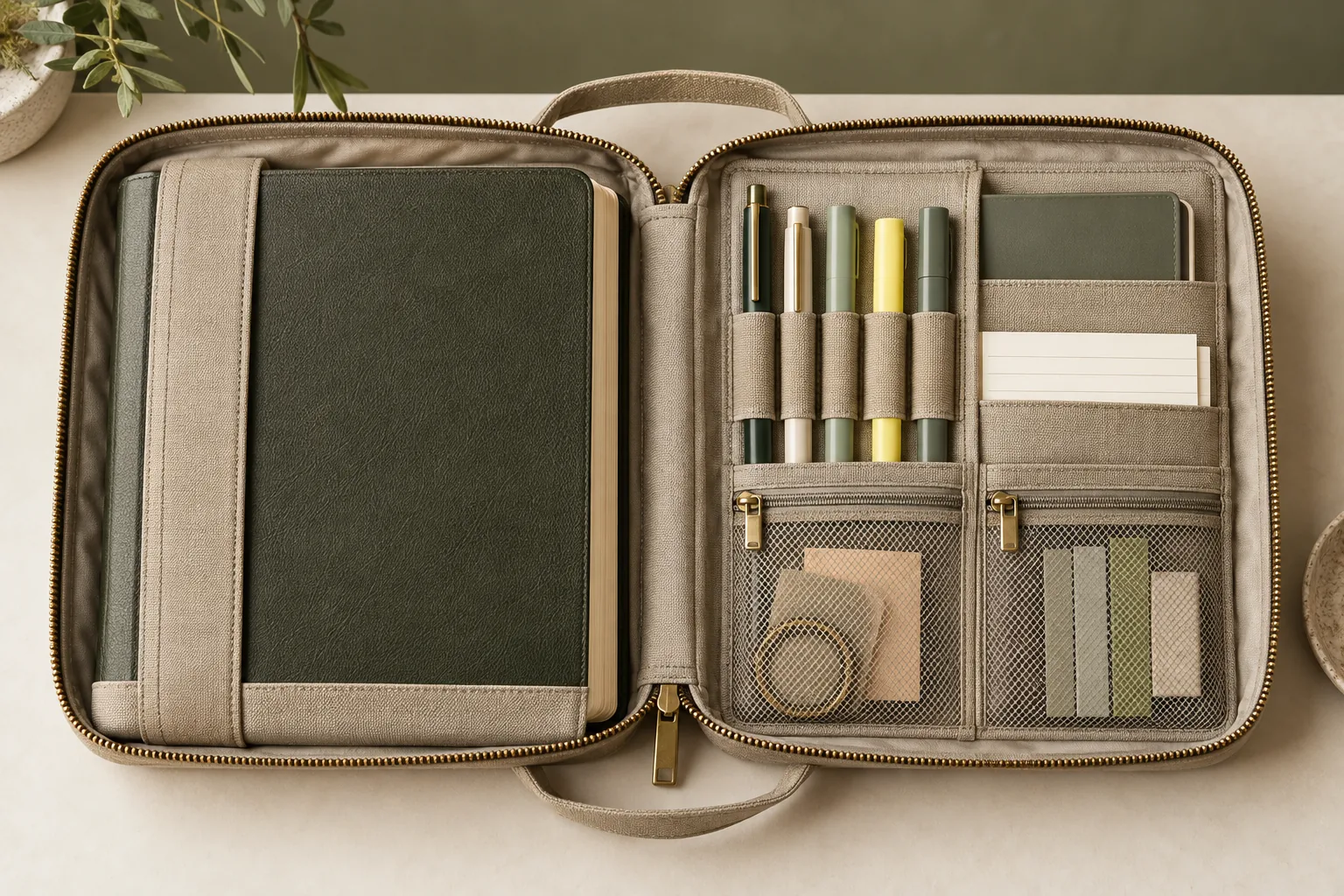
Quick answer: Start with the items your customer carries, then give each frequently used item an accessible place. A Bible retainer, a few pen or highlighter loops, a flat notes pocket and one secure pocket often make a better organizer than adding every possible compartment.
A Bible cover protects a book. A Bible organizer also manages the tools used for reading, note-taking and church activities. For a custom project, the pocket layout should follow the audience: a journaling group may need more marker storage, while a church welcome gift may benefit from a simpler, lighter case.
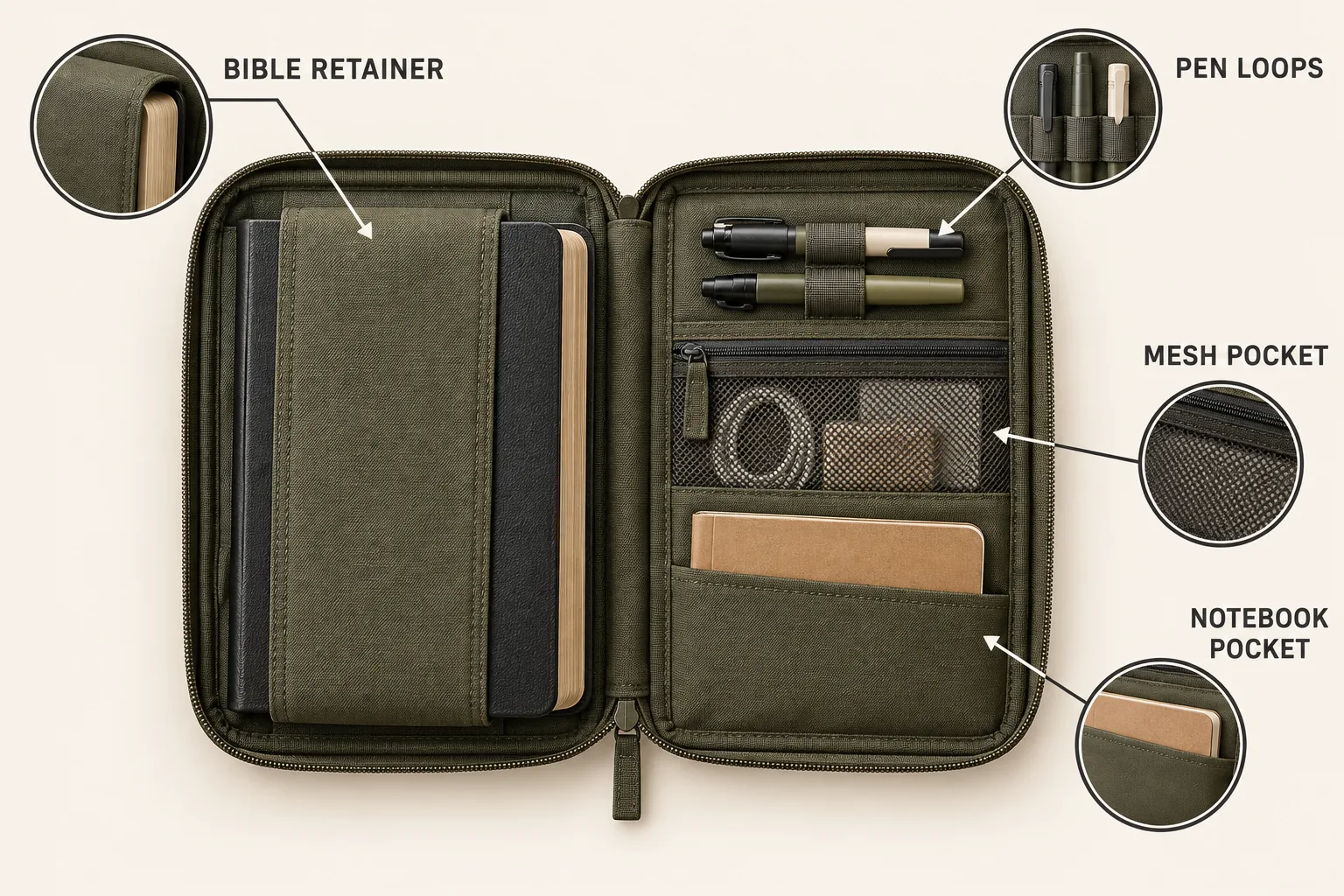
Begin with the Bible retaining area
Confirm the actual Bible dimensions before drawing the pockets. A retaining sleeve or elastic support can hold the cover in place, but it must not pull on the binding or obscure the pages. Check whether the Bible should remain inside the case while being read. If so, the case must open comfortably and lie in a usable position.
Choose pockets by item and frequency of use
Pen and highlighter loops
Match loop width to the real writing tools. Thin pen loops may not hold wide markers, while loose loops allow pens to fall out. Decide whether writing tools sit near the spine, on a fold-out panel or inside a zipped compartment. Test access with the Bible installed.
Notes, cards and bulletins
A flat slip pocket can hold a small notebook, prayer cards or church bulletins. If the project includes a specific journal, send its dimensions with the Bible measurements. Avoid placing a thick notebook directly against a delicate Bible cover without adequate separation.
Mesh and zip pockets
Mesh pockets make small items visible; a zip pocket is better when items must stay contained during travel. Pocket depth and opening width should match their contents. Bulky contents may press on the Bible or prevent the outer zipper from closing, so loading tests matter during sample review.
Plan the outer structure as well
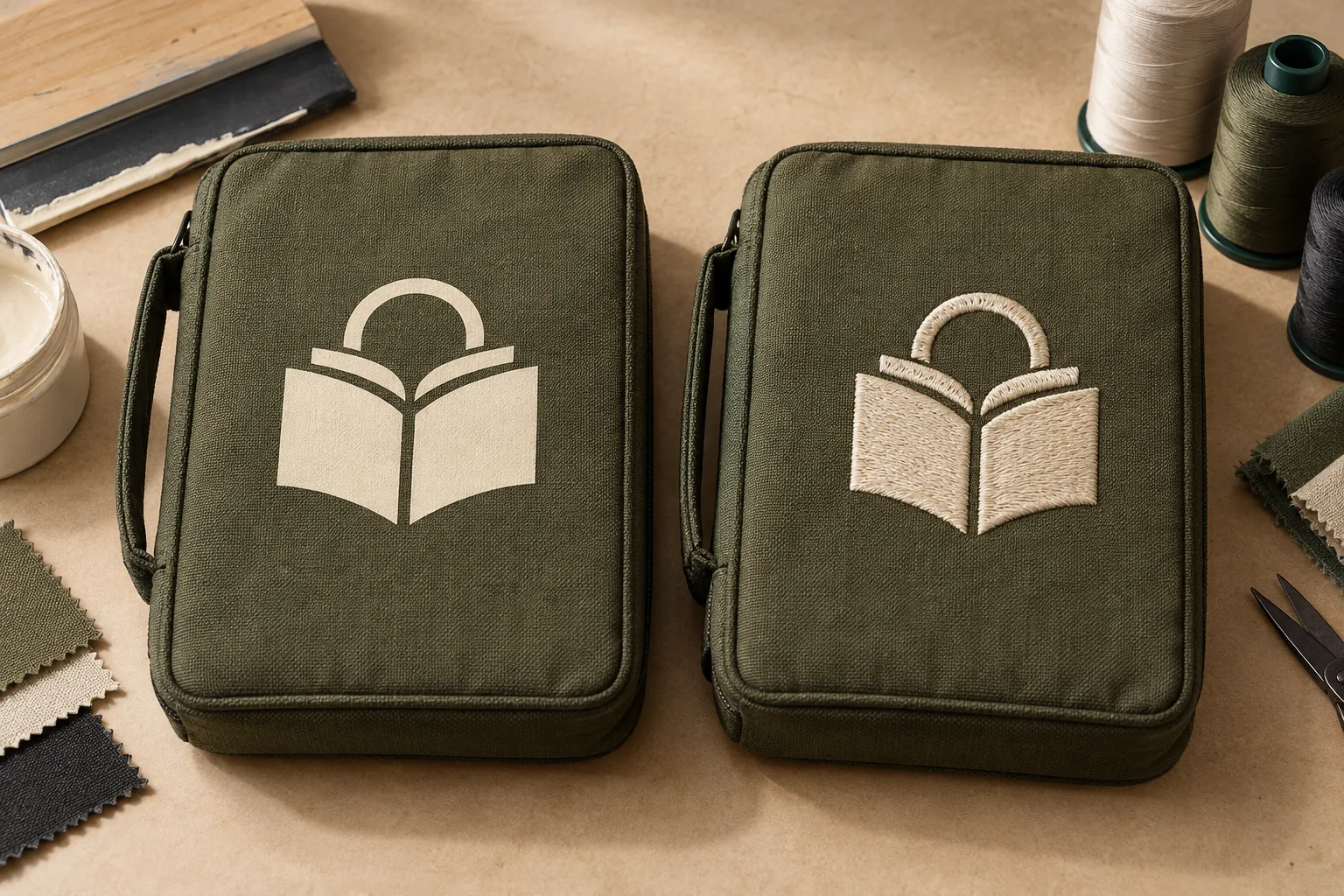
A full zipper helps contain the Bible and accessories. Carry handles are useful for church and study group transport; a shoulder strap may suit customers carrying more than one book. Reinforcement, zipper placement and padding should be selected alongside the internal layout because they affect weight, cost and the feel of the finished case.
The pictured layouts are concept illustrations, not a promise that one arrangement fits every Bible. We confirm pocket counts and dimensions from the buyer’s brief and approved sample.
A practical pocket-layout brief
- Measure the actual Bible and all planned accessories.
- List the items used every day, occasionally and only for travel.
- Choose the minimum useful number of loops and pockets.
- Mark which items require a zipper or separate compartment.
- Test the loaded sample for access, balance and zipper clearance.
Match the layout to the project
Church gifts: prioritize an easy-to-use case, a note or bulletin pocket and clear branding. Bookstore collections: consider several editions and establish a fit range before approving a common pattern. Journaling products: allow for pens, highlighters, tabs and a notebook while controlling bulk.
Start with our Bible measurement guide, then learn what a Bible case is and review our custom Bible cover design examples. Browse custom Bible bag organizers for construction ideas. Liqi Bag’s minimum order is 500 pieces for made-to-order projects; send your item list and reference layout to start a sample discussion.
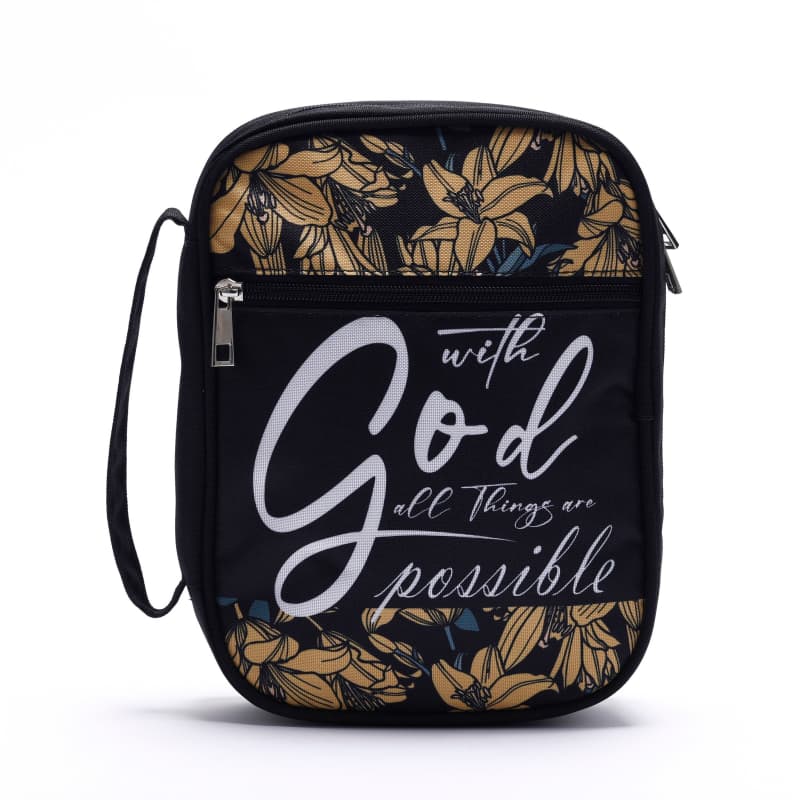 Custom Bible Bag Organizers & Bible Covers
 Backpacks & Drawstring Bags
 Cooler & Thermal Bags
 Cosmetic & Toiletry Bags
 Tote & Shopping Bags
 Tool, Medical & Equipment Bags
 Washable Kraft & Tyvek Bags
 Camera Bags & Photography Cases
 Crossbody & Shoulder Bags
 Pet Bags & Accessories
 Storage & Organizer Bags
 Travel & Duffel Bags