

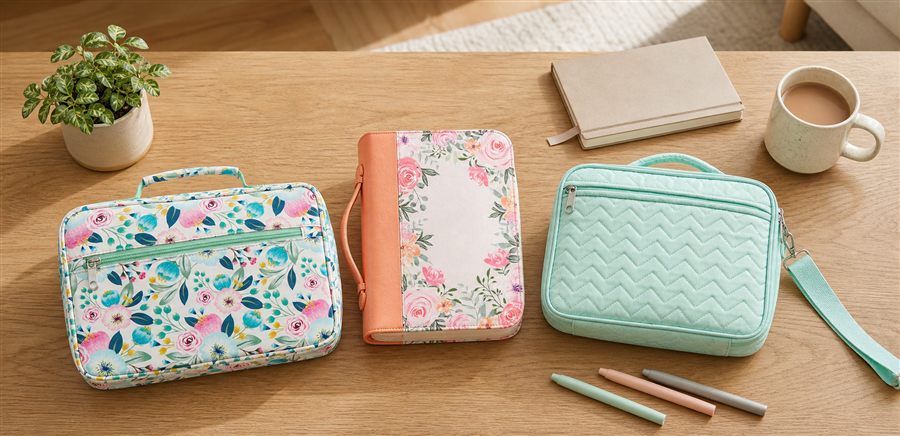
A Bible case is a protective cover or carrying case designed to hold a Bible during storage, study and travel. Unlike a simple book jacket, many Bible cases use a zipper, handle, padding and organizer pockets to protect the book while keeping pens, bookmarks, notes and study accessories together.
The terms Bible case, Bible cover and Bible carrying case are often used interchangeably. A Bible cover may be a fitted or zippered protector, while a Bible case usually suggests a more structured design with carrying and storage features. There is no universal naming rule, so the size, closure and internal layout are more important than the product name alone.
View examples: Bible Covers and Bible Cases
I. Structure and Design Features
Although Bible cases vary in shape and style, most practical designs combine several core elements:
- Exterior material: Oxford fabric, polyester, nylon, canvas, corduroy, quilted fabric and PU leather are common choices. The material affects weight, texture, cleaning and overall appearance.
- Lining and padding: A soft lining helps prevent scratches, while light foam or quilted padding protects the cover and corners from everyday bumps.
- Closure system: A full zip-around closure helps keep the Bible closed and reduces exposure to dust. Simpler covers may use a flap, elastic strap, snap or open sleeve construction.
- Book-holding panels: Interior sleeves or elastic sections hold the front and back covers in place so the Bible does not slide around inside the case.
- Organizer sections: Pen loops, mesh pockets, card slots, document sleeves and exterior zipper pockets can store study tools and personal items.
- Carrying options: A top handle is convenient for short trips, while a detachable shoulder strap helps when the case also holds a journal, phone or larger study Bible.
A useful Bible case should protect the book without making it difficult to open, read or remove. Zippers should move smoothly, handles should be reinforced and the internal space should match the Bible rather than allowing excessive movement.
II. Main Types of Bible Cases
Bible cases can be grouped by their structure and intended use. The following types are commonly seen:
1. Zip-Around Bible Cover
This is one of the most common styles. The zipper opens around three sides, allowing the Bible to remain protected when stored and carried. Interior panels may hold the book covers in place so the Bible can be read without being removed completely.
2. Bible Carrying Case with Handle
A carrying case adds a top or side handle to a zippered cover. It is practical for church services, Bible study groups, school and travel because it can be carried separately without placing it inside another bag.
3. Bible Organizer Case
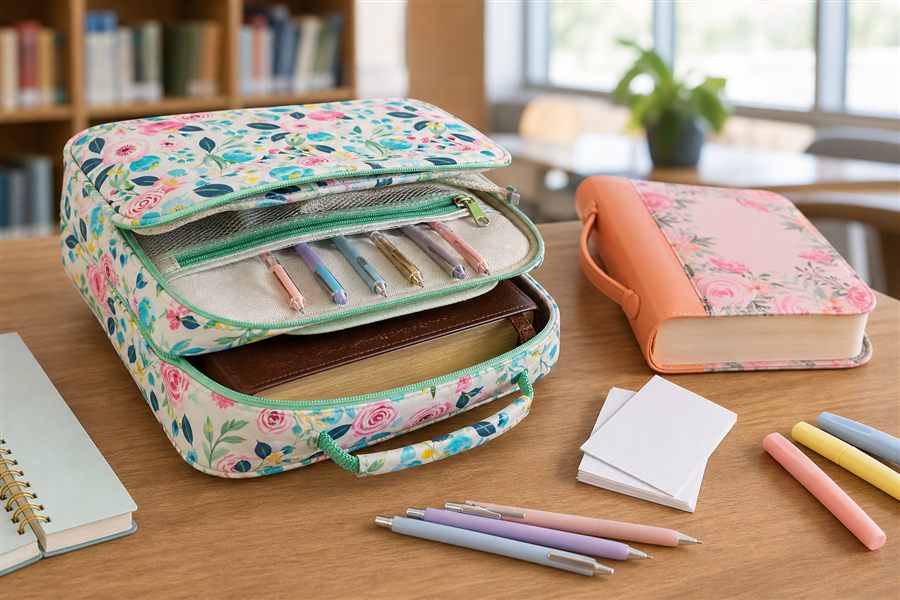
An organizer case includes dedicated storage for pens, highlighters, notes, cards and bookmarks. Some designs also provide space for a phone, journal or small devotional book. A wide-opening Bible organizer case is especially helpful for readers who use several study tools at once.
4. Bible Shoulder Bag
This design uses a detachable or fixed shoulder strap. It is suitable for a large study Bible or for users who carry additional materials. The strap should connect to reinforced attachment points so the weight does not pull directly on the outer fabric.
5. Personalized Bible Cover
Names, initials, verses, church identities and original artwork can be added through embroidery, printing, labels or selected embossed details. Textured materials such as corduroy and quilted fabric are popular for gift-oriented designs.
6. Simple Sleeve or Slip-On Cover
A sleeve-style cover is lighter and less bulky than a full organizer. It works well for home storage or readers who only need basic surface protection, but it normally provides less protection for the page edges and fewer storage features.
III. Common Bible Case Materials
The best material depends on how often the case will be carried, how much organization is required and how the user prefers it to look and feel.
- Synthetic woven fabric: Oxford, polyester and nylon belong in the same practical group for comparison. Oxford describes a woven construction and is commonly made with polyester or nylon yarn. These fabrics are lightweight, durable and suitable for pockets, printing and organizer structures.
- PU leather: PU provides a smooth, structured and easy-clean surface. A PU leather Bible cover with a zipper and handle can be useful for frequent handling and gift presentation.
- Corduroy: Corduroy has a warm raised texture and works well with monograms and embroidery. An embroidered corduroy Bible case is a popular option for personalized gifts.
- Quilted fabric: Quilting combines an outer fabric with light padding and stitched patterns. It provides a soft feel and additional cushioning without requiring a rigid shell.
- Velvet: Velvet has a decorative soft pile and a more gift-oriented appearance. It requires gentler cleaning and handling than smooth PU or tightly woven synthetic fabric.
- Canvas or cotton blend: Canvas provides a natural woven appearance and is suitable for simple printed or embroidered covers. It can be heavier and may absorb moisture more easily than coated synthetic fabric.
Material alone does not determine protection. The lining, padding, zipper, seam construction and fit all influence how well the finished case protects the Bible.
IV. Where Are Bible Cases Used?
At Church
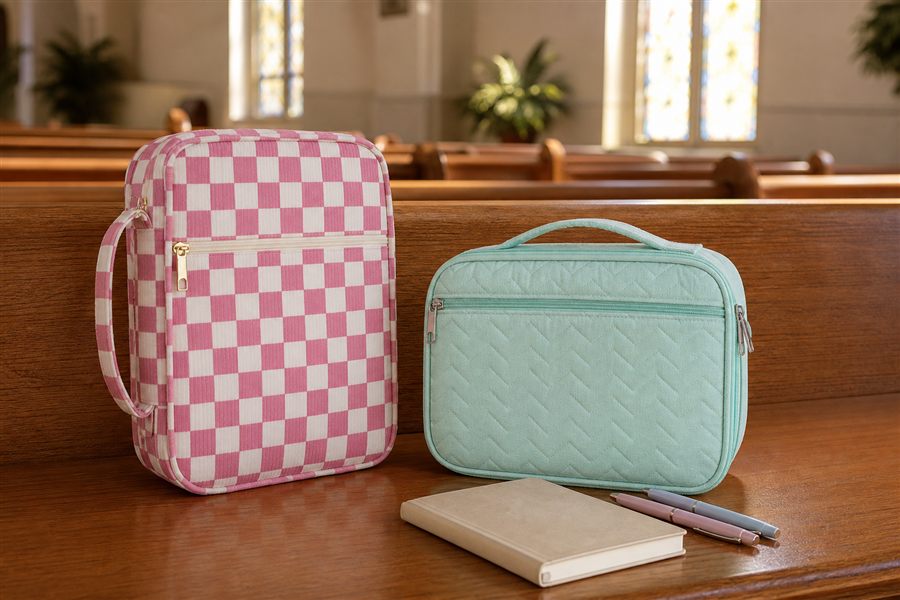
A Bible carrying case keeps the book, pens and notes together when attending a church service, prayer meeting or Bible study group. A handle makes the case easy to carry between home, transportation and the church, while a secure zipper prevents loose items from falling out.
At School or College
Students in faith-based schools, seminaries, campus ministries and religious studies courses may carry a Bible together with notebooks, pens and index cards. An organizer case keeps these tools in one place and helps protect the book inside a backpack or while moving between classrooms.
At Home
At home, a Bible cover helps reduce dust and everyday surface wear. Organizer pockets also keep reading notes, prayer cards and pens ready for personal study without scattering them across a desk or shelf.
During Travel
A zippered and lightly padded Bible case helps protect the book inside a suitcase, tote or backpack. Travelers should choose a secure closure, reinforced handle and material that can tolerate frequent handling.
As a Gift
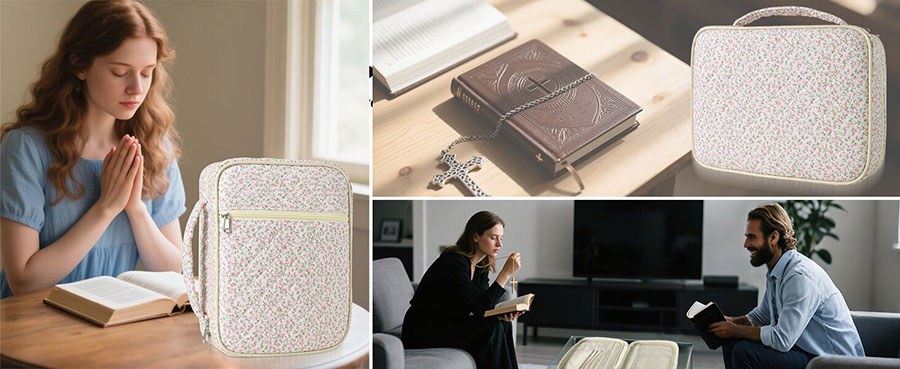
Bible covers are often given for birthdays, Christmas, graduation, confirmation, baptism, weddings and pastor appreciation. A personalized color, name, initial or embroidered message can make the case more meaningful to the recipient.
V. How to Choose a Bible Case
Before buying a Bible case, consider these practical criteria:
- Size and fit: Compare the internal case dimensions with the closed height, width and spine thickness of the Bible.
- Level of protection: Choose padding and a full zipper for frequent travel, or a lighter cover for home use.
- Storage needs: Decide whether you need only the Bible or additional space for pens, a journal, phone, cards and notes.
- Carrying method: Select a handle for simple transport or a shoulder strap for heavier books and accessories.
- Material and care: PU is easy to wipe clean, synthetic woven fabric is practical and lightweight, while corduroy, velvet and quilted fabric provide a softer appearance.
- Zipper and construction: Check that the zipper opens smoothly and that handles, corners and strap attachments are reinforced.
- Personal style: Floral prints, solid colors, embroidery and textured fabrics allow the case to match the user’s age, taste and purpose.
VI. How to Measure a Bible for a Case
Bible editions vary significantly, so labels such as standard, medium or large are not always reliable. Measure the closed book before choosing a case:
- Measure the height from the top edge to the bottom edge.
- Measure the width from the spine to the outside page edge.
- Measure the spine thickness at its widest point.
- Include permanent index tabs, inserts or notes that increase the book’s size.
- Confirm whether the case must also hold a journal, phone or study accessories.
The case needs a small amount of allowance for the lining, zipper and easy insertion, but too much empty space can allow the Bible to move and place unnecessary stress on the corners.
VII. Usage and Care Tips
- Do not force an oversized Bible into a case or pull the zipper against the book corners.
- Distribute pens and accessories evenly so one pocket does not become overfilled.
- Use the handle or shoulder strap rather than carrying the case by its zipper pull.
- Wipe PU surfaces with a soft damp cloth and dry them promptly.
- Spot-clean fabric cases according to the material and avoid soaking structured padding.
- Allow a damp case to dry completely before storing it in a closed cabinet.
- Keep sharp pen tips capped so they do not mark the lining or Bible pages.
VIII. Frequently Asked Questions
Is a Bible case the same as a Bible cover?
The terms overlap and are often used for the same product. In general, “Bible case” more often describes a zippered carrying or organizer design, while “Bible cover” may also include simple fitted, slip-on or jacket-style protectors.
Can a Bible case hold a journal and pens?
Yes, if the internal layout and depth are designed for them. Organizer cases can include pen loops, document sleeves, mesh pockets and extra space for a notebook or journal.
Does a Bible case need to be waterproof?
Most users need protection from light splashes rather than full waterproof performance. Coated fabric or PU can help resist moisture, but water may still enter through seams and zippers unless the complete construction is specifically designed and tested for waterproofing.
What is the best Bible case for daily use?
A lightweight zippered case with a handle, soft lining and a few organizer pockets is practical for most daily users. The correct size and reliable construction are more important than any single material.
Choosing the Right Bible Case
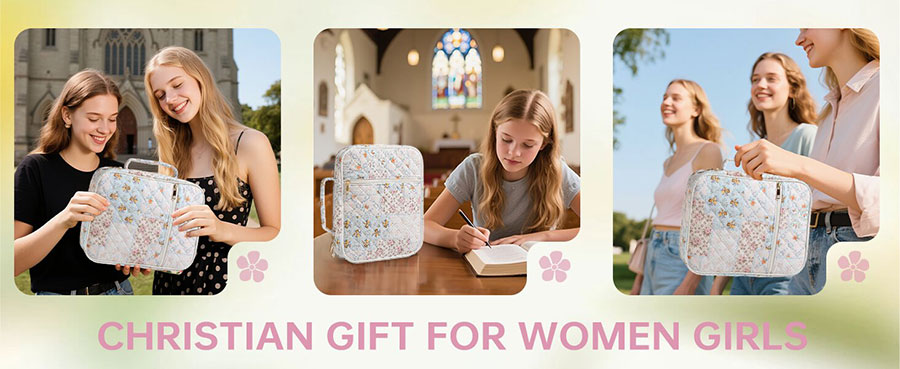
A Bible case combines book protection, organization and portability. The right design depends on the Bible’s dimensions, how often it will be carried and which accessories need to stay with it. A simple cover may be enough for home reading, while a padded zippered organizer is more suitable for church, school and travel.
Liqi Bag develops Bible covers and Bible carrying cases in different sizes, materials and organizer layouts. Existing products can provide a starting point for evaluating structure, pockets, handles, shoulder straps, printing and embroidery.
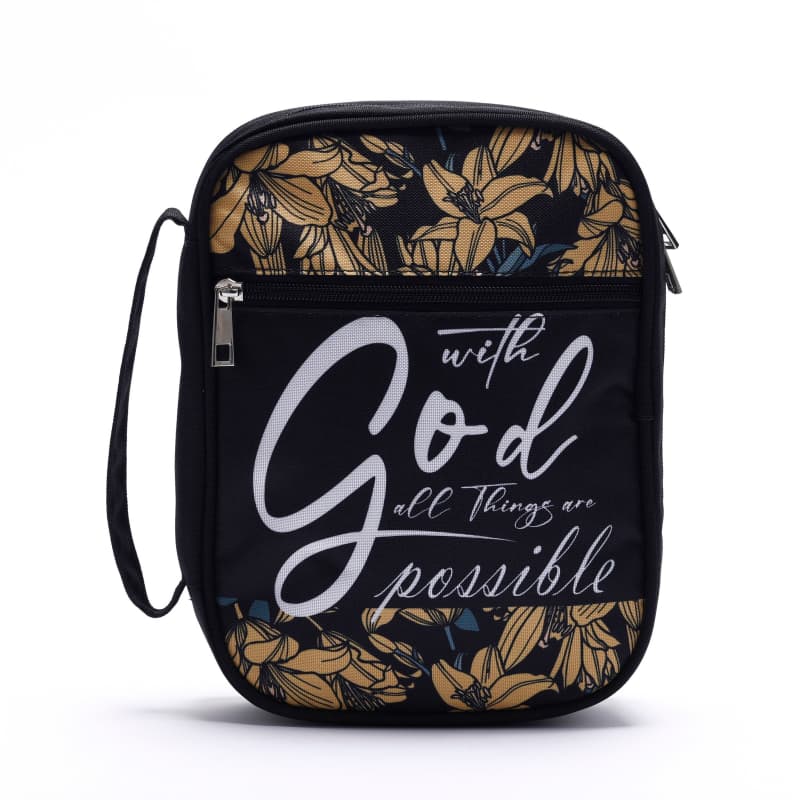 Bible Case & Bible Covers
 Backpacks & Drawstring Bags
 Cooler & Thermal Bags
 Cosmetic & Toiletry Bags
 Tote & Shopping Bags
 Tool, Medical & Equipment Bags
 Washable Kraft & Tyvek Bags
 Camera Bags & Photography Cases
 Crossbody & Shoulder Bags
 Pet Bags & Accessories
 Storage & Organizer Bags
 Travel & Duffel Bags