

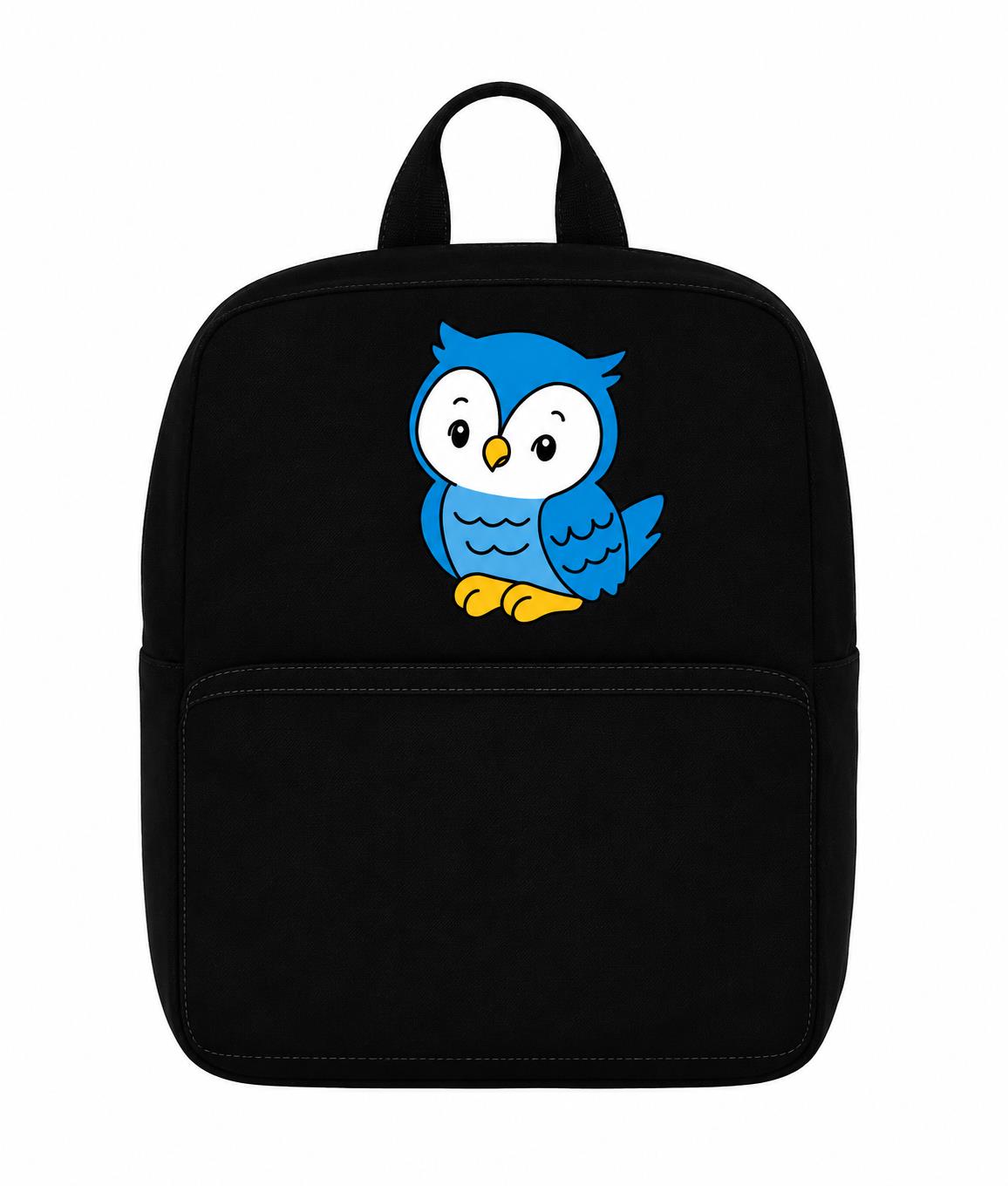
What should a buyer specify before sampling a custom printed backpack? Start with the bag dimensions and use, then confirm the Oxford fabric, coating, lining, back padding, straps, pocket layout, zipper construction and print artwork. A reference image alone does not define how the finished backpack should be sewn or tested.
This guide uses a square black backpack development brief as an example. Its four illustrated print directions have been adapted into the unbranded concept images below. They show possible artwork placement, not finished production samples. Liqibag can review similar OEM/ODM backpack requirements with buyers and develop a sample against an approved specification. See our custom bag development process.
Example construction brief
| Component | Reference specification | What to confirm before production |
|---|---|---|
| Body | Square-profile black backpack, 14 × 11.5 × 4 in (H × L × W), approximately 35.6 × 29.2 × 10.2 cm. | Finished tolerance, packing volume and how the bag stands when loaded. |
| Shell | Oxford fabric described in the brief as “600 × 300D” with a poly-rubber coating. | Actual fabric construction, coating type, weight and water-resistance test method. Do not assume a waterproof rating from the description alone. |
| Back panel | Double-stitched back panel, 7 mm padding, a center stitch and mesh on the contact surface. | Foam density, comfort, seam strength and fit on a physical sample. |
| Shoulder straps | Black adjustable straps with 7 mm padding and a center stitch. | Finished strap width and usable adjustment range; the dimensional wording in the source brief needs clarification. |
| Lining | Black 20D nylon lining, including the interior sides and bottom. | Actual lining weight, attachment method and finish around pockets and seams. |
| Front storage | Front pocket about 6.5 × 9.5 × 2 in; outer flap area about 2.5 × 9.5 in. | Usable opening, pocket depth and whether printing crosses a seam or zipper. |
| Zippers | Black main zipper with two sliders; front pocket zipper with one slider; 4 mm coil noted in the brief. | Coil versus molded construction, puller type and opening direction on the approved sample. |
Four artwork directions on one backpack shape
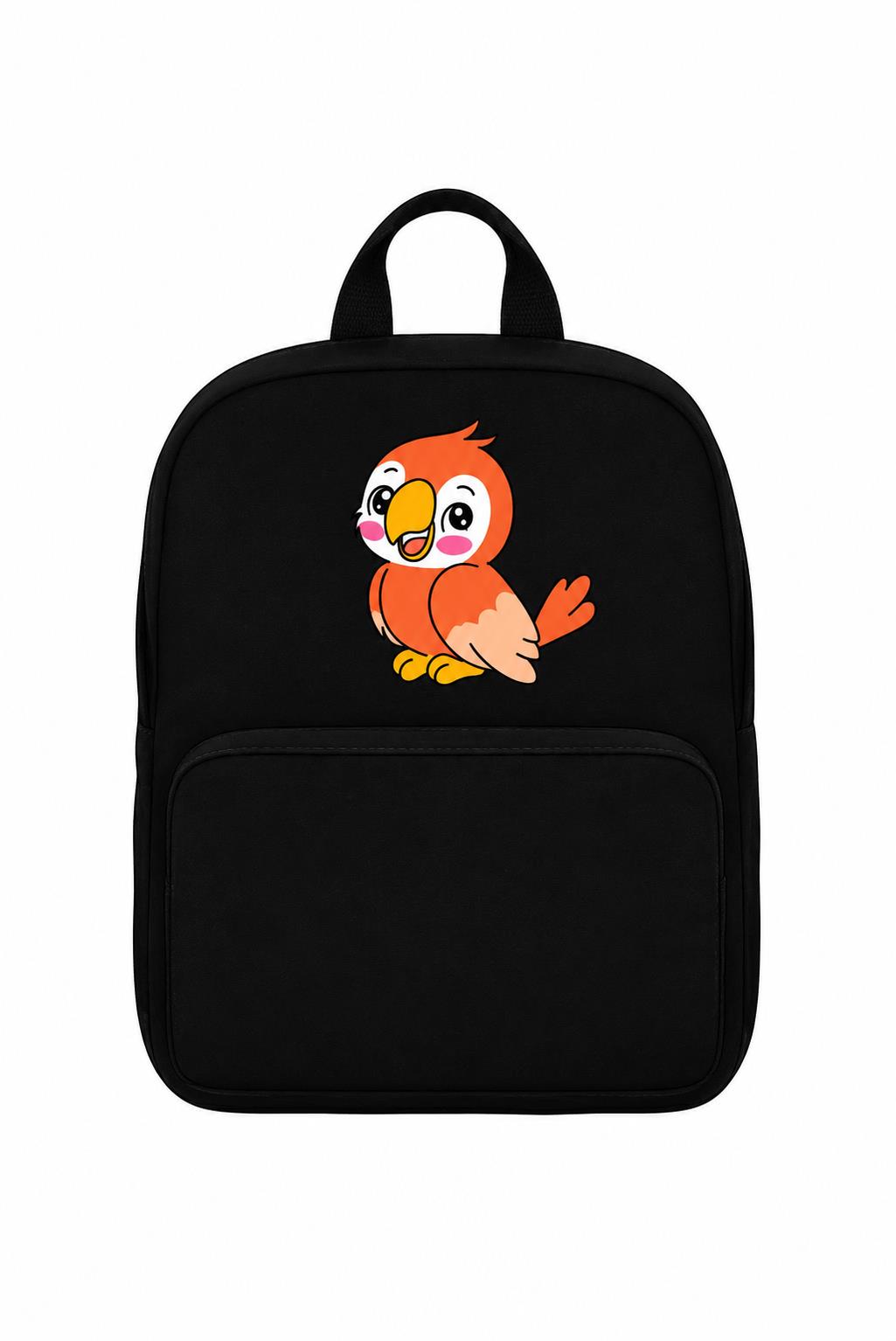
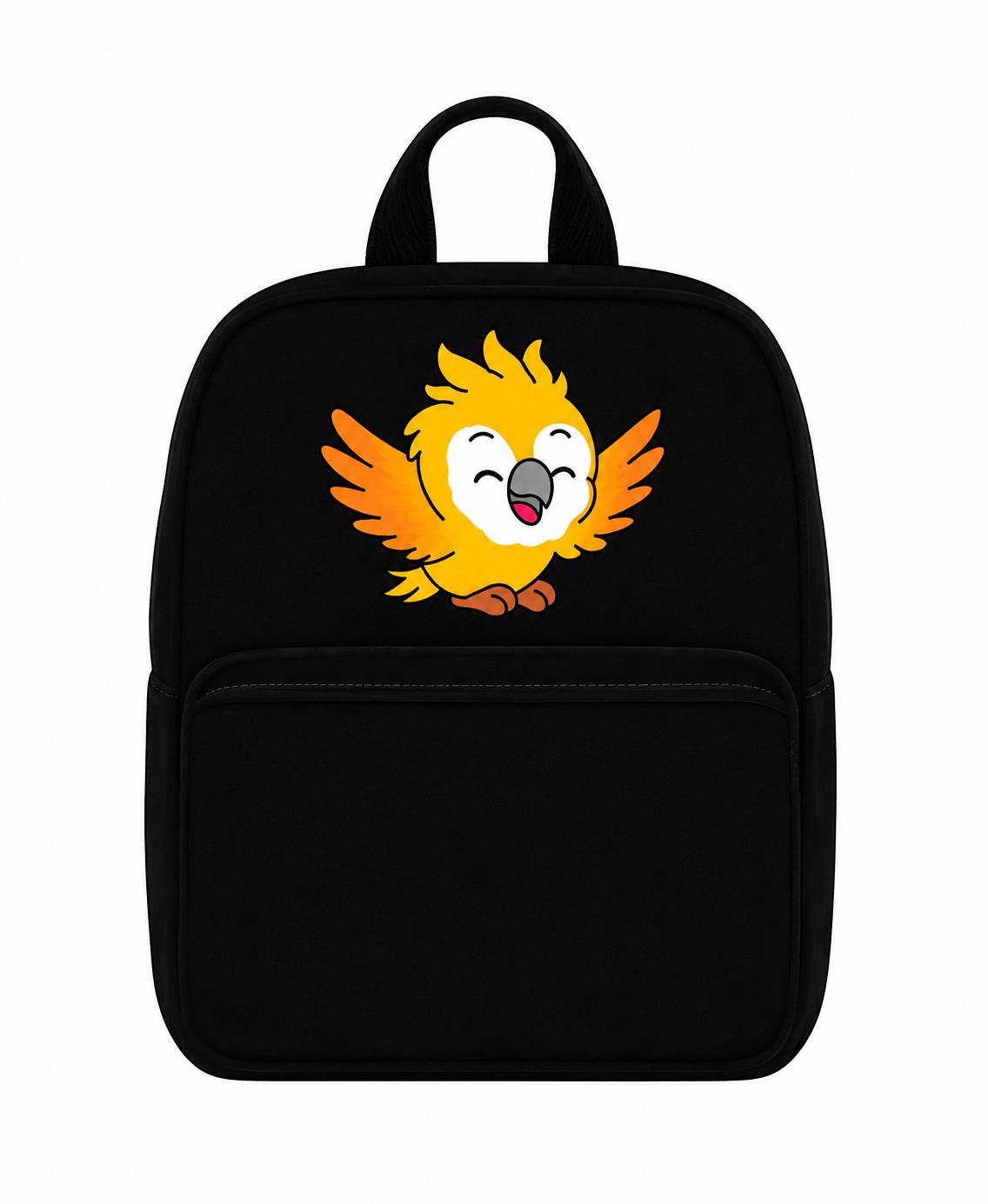
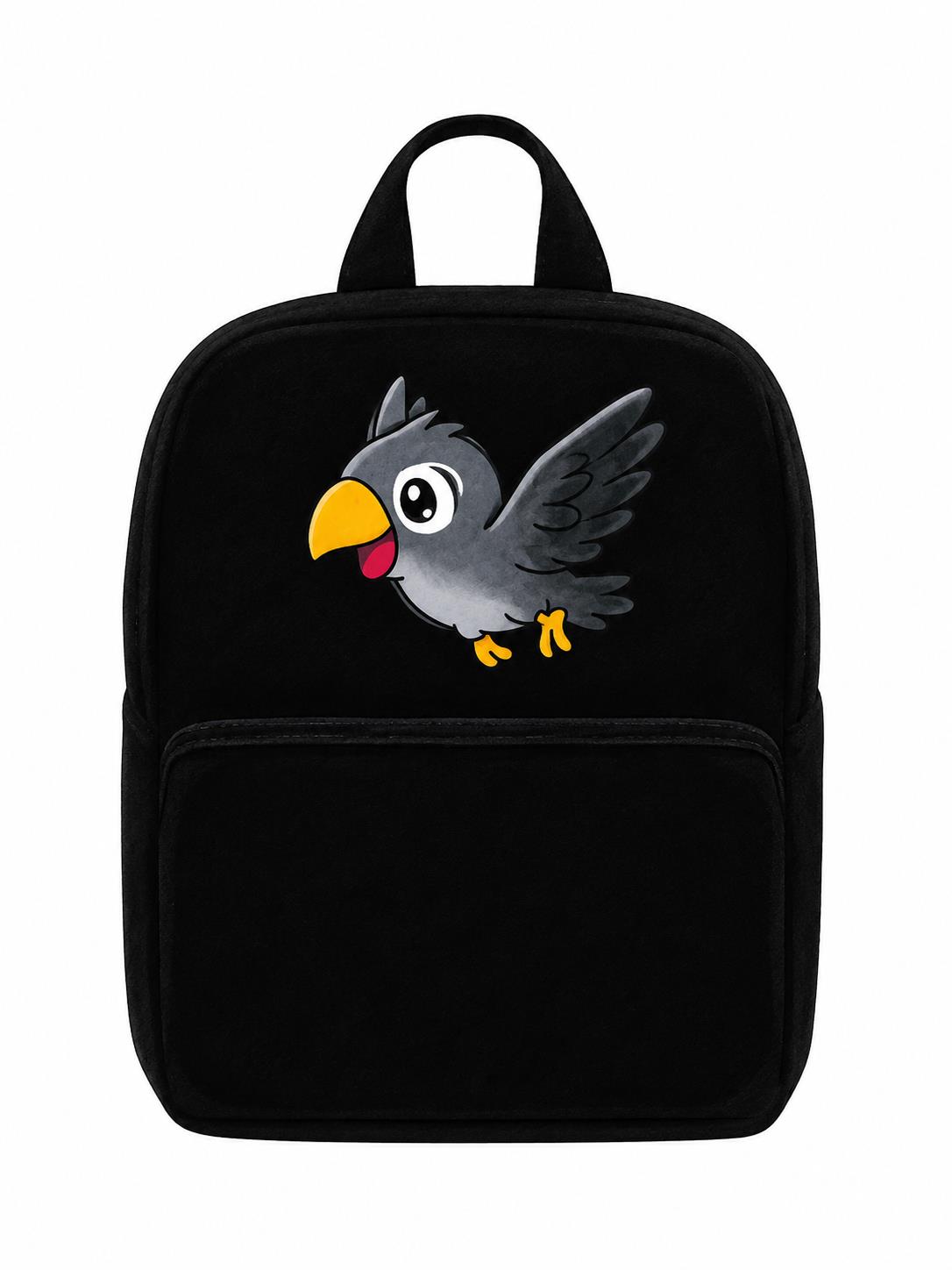
Using one base pattern for several graphics can simplify fit and construction review. Each artwork version still needs its own approved placement, colors and print sample. The four images below are edited concept illustrations derived from the supplied brief. Brand names and logos have been removed; the bird graphics remain as visual references and must only be used commercially with the artwork owner’s permission.
Check the print method on the actual fabric
The reference brief calls for direct-to-fabric (DTG) printing. That request should be tested before it becomes a production promise: coated Oxford fabric may behave differently from cotton or an uncoated textile. The factory should trial the proposed ink and pretreatment on the selected shell, then review color, adhesion, rubbing resistance, wash or cleaning expectations and the finished appearance after sewing. If DTG does not give the required result, the buyer and factory can assess another compatible print method and approve a new sample. For another Oxford-fabric construction example, see Liqibag’s custom Oxford fabric bag.
Sample approval: what should be checked?
For a multi-artwork program, an efficient sequence is to approve one construction sample first, then approve a print sample for each artwork. Measure the finished bag and front pocket; load it to check the back padding and straps; open and close both zippers; inspect lining coverage and stitching; and compare each printed panel with the signed-off artwork. Keep the approved sample and written measurements as the production reference.
Several commercial details were not fixed in the example brief, including order quantity, target unit price, exact fabric weight, test standard, packaging and carton specification. These must be agreed separately. A quotation should state material assumptions, printing method, number of artwork versions, sample charges, minimum order quantity, production lead time and any testing requested by the buyer.
Frequently asked questions
Does a coated Oxford backpack automatically count as waterproof?
No. A coating description does not establish a waterproof rating for the finished bag. Seams, zippers and construction also matter. Agree on a relevant test and claim before using “waterproof” in product copy.
Can four graphics share the same backpack pattern?
Yes, if the size, panels and construction are unchanged. Each print still needs artwork approval and a color check on the selected fabric.
What is the first step for a custom backpack order?
Send the intended use, dimensions, target quantity, material preference, artwork files, destination market and any required tests. Liqibag can then review the specification and sample plan. Browse our backpack and drawstring bag range, learn how our OEM/ODM process works, or contact Liqibag with your brief.
 Custom Bible Bag Organizers & Bible Covers
 Backpacks & Drawstring Bags
 Cooler & Thermal Bags
 Custom Cosmetic Bags & Makeup Pouches
 Tote & Shopping Bags
 Tool, Medical & Equipment Bags
 Washable Kraft & Tyvek Bags
 Camera Bags & Photography Cases
 Crossbody & Shoulder Bags
 Pet Bags & Accessories
 Storage & Organizer Bags
 Travel & Duffel Bags