

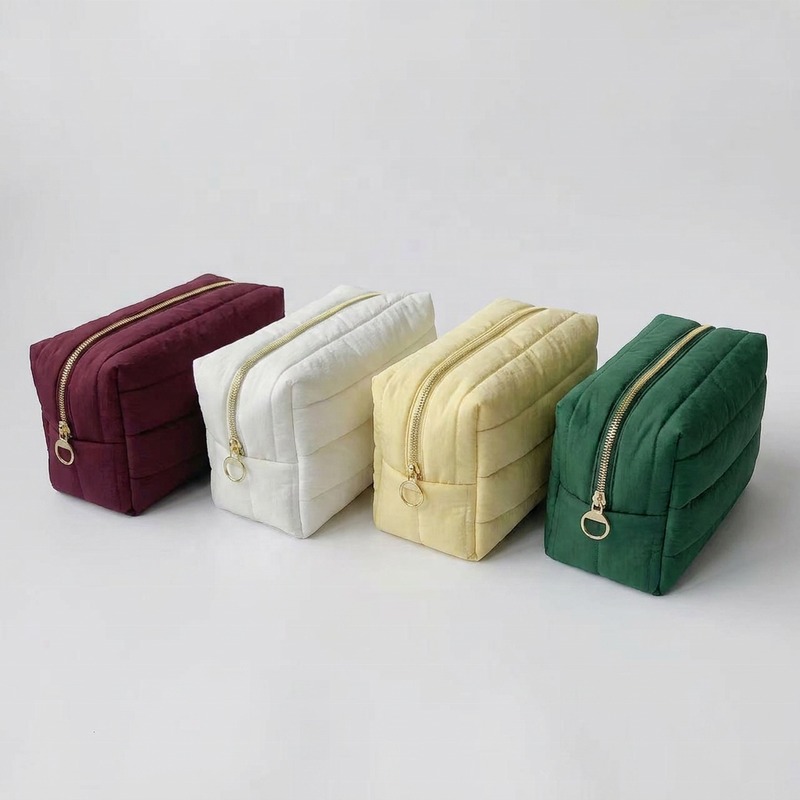
Choosing materials for a custom cosmetic bag starts with what it needs to hold. A small everyday makeup pouch calls for easy access; a travel organizer may need wider openings and separate pockets; a branded gift bag may put color, print and hand feel first. This guide uses nine drawstring-backpack design concepts as a material and trim reference and translates them into cosmetic-bag sampling ideas. They are not ready-made cosmetic bag specifications or guaranteed performance claims.
Compare materials · Choose construction · Plan branding · Prepare a sample brief · Read the FAQs
Custom cosmetic bag materials at a glance
The comparison below records the fabric and details shown on each page of the source design deck. The fourth column is a suggested cosmetic-bag application, not a product pictured in the deck. No unverified fabric weights, sizes or waterproof ratings have been added.
| Source page | Material named in the source | Source details | Cosmetic-bag design idea | Confirm at sampling |
|---|---|---|---|---|
| 1 | Twill hollow-yarn fabric | Polyester drawstring channel, embroidery, webbing, metal ring, patch pocket, contrast panels, zip pocket | Textured exterior with an embroidered mark and organized pockets | Fiber composition, fabric weight, hand feel |
| 2 | Washed denim | Letter print, internal elastic drawcord, appliqué embroidery, raised embroidery | Casual zip pouch or branded gift bag | Wash effect, colorfastness, lining |
| 3 | Glossy liquid-look PU | Eyelets, drawcord, flock print, embroidered label, zip pocket, contrast tabs | Glossy exterior with contrasting details | Backing fabric, thickness, surface wear |
| 4 | Silver-gray coated woven fabric | Patterned cord, outline embroidery, mesh patch pocket, zip pocket, matching pull tab | Coated exterior with a visible small-item pocket | Coating feel, cleaning method, seams |
| 5 | Nylon | Print, stripe panels, elastic pocket, raised print, embroidered patch, lace, braided cord, metal charm | Lightweight travel makeup organizer | Exact fabric, body, print result |
| 6 | Satin woven fabric | Braided cord and beads, cross-stitch, two-color panels, concealed zip pocket, elastic mesh | Soft-luster gift cosmetic pouch | Fiber composition, snagging, lining |
| 7 | Mesh and silver-coated woven fabric | Metal-tooth zipper, elastic mesh, fine-mesh appliqué, metal cord stopper, screen print | See-through organization paired with a coated outer panel | Mesh opening, stretch, edge binding |
| 8 | All-polyester satin base with digital direct print | Webbing handle, eyelets, hotfix rhinestones, soft-PVC zip pocket, hidden mesh pocket, metal strap | All-over printed branded gift bag | Print sample, hardware weight, trim attachment |
| 9 | Soft PU leather | Braided PU cord, screen print, eyelets, metal rings, ruffles, concealed pocket, hook | Soft PU pouch with decorative details | PU thickness, flexing, hardware attachment |
Nylon: a practical starting point for lightweight organizers
The nylon concept in the source uses printing, stripe panels, an elastic pocket, raised print and an embroidered patch. For a cosmetic bag, consider a nylon exterior with a zippered main compartment and small-item divisions, or use contrast panels to build a coordinated collection. Its hand feel, structure and cleaning method depend on the actual fabric and finish. “Nylon” alone does not mean the finished bag is waterproof.
Washed denim: casual texture with room for embroidery
The washed-denim concept features a printed letter motif, appliqué and raised embroidery. In a cosmetic-bag brief, denim can support a casual or vintage-looking zip pouch, potentially paired with a light lining and a simple embroidered logo. Compare the wash finish, fabric weight and colorfastness on real samples. The image below shows denim texture on a tote, not a finished cosmetic bag.

Satin and polyester satin: soft luster for gift collections
One source page calls for satin woven fabric, while another explicitly specifies all-polyester satin with digital direct printing. Satin describes a weave or appearance, not necessarily silk. For a cosmetic bag, consider a soft-luster finish, two-color panels, embroidery or an all-over print, and inspect the lining, seams and possible snagging. The pictured bag below is silk satin: it illustrates appearance only, not the source’s polyester satin or a Liqibag cosmetic bag.

PU: choose the surface and structure together
The source includes both glossy liquid-look PU and soft PU leather, with eyelets, braided cords, contrast pockets, zip pockets and decorative edges. A cosmetic-bag design could use a glossy or matte PU exterior with a restrained zipper and interior divisions. PU formulations, backings and thicknesses vary; confirm touch, wear, cleaning instructions and any required test standard on the chosen material and finished sample.
Mesh and coated woven fabric: useful as a combination
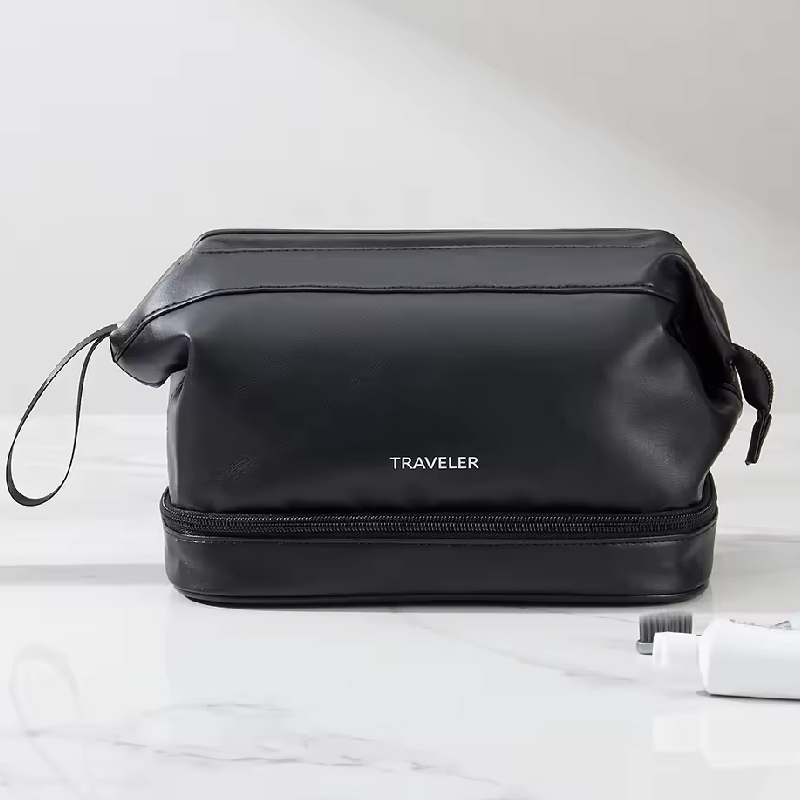
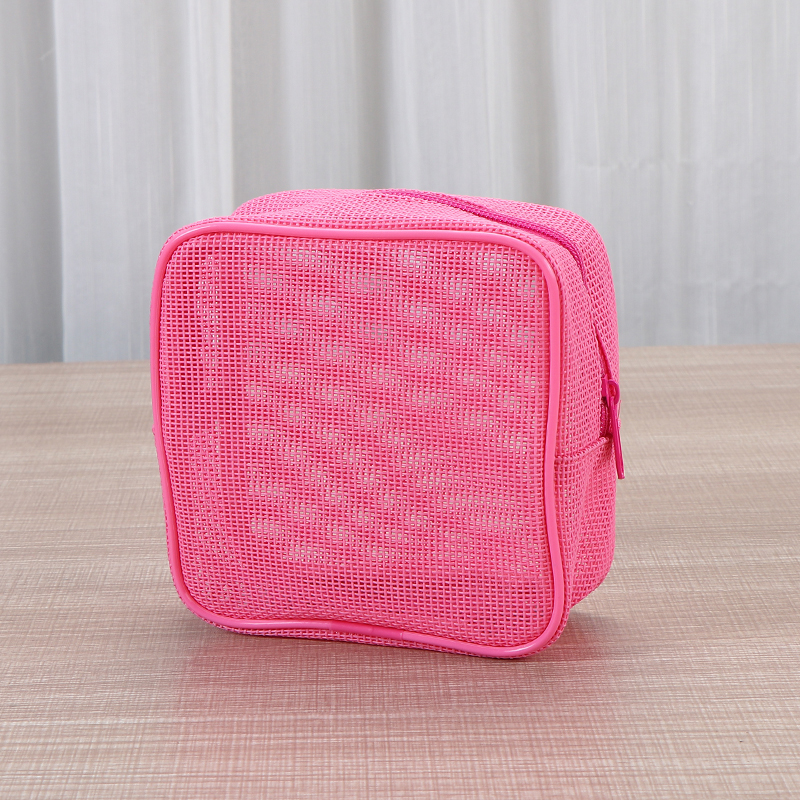
Two source concepts pair silver-coated woven fabric with mesh pockets or panels. In a cosmetic bag, mesh can make internal contents easier to see, while a coated woven textile may be considered for the outer appearance or a wipe-clean design direction. Test the mesh opening and stretch, coating feel, edge binding and whether the selected surface really cleans as required. Open mesh is not a leakproof compartment.
Twill hollow-yarn fabric: request the material card first
The first source concept labels its material “twill hollow-yarn fabric” and combines it with webbing, embroidery, contrast panels and pockets. Before choosing it for a cosmetic bag, request the fiber composition, fabric weight and physical sample. Those descriptive terms alone do not establish durability or a specific fiber. If the sample suits the intended bag, a simple pouch with an embroidered mark could be explored.
Construction and trims: build around how the bag will be used
The source deck includes drawstring channels, eyelets, a No. 5 metal-tooth zipper, webbing handles, elastic mesh, a soft-PVC zip pocket, concealed pockets and metal pulls or buckles. These are possible components, not a checklist to put on every bag. Choose the opening and compartments around the actual cosmetics and tools.
| Intended format | Consider first | Sample check |
|---|---|---|
| Everyday pouch | One main compartment, smooth zipper, a few small pockets | Opening width, zipper pull, lining cleanability |
| Travel organizer | Wider opening, mesh divisions, handle | Bottle fit, base support, pocket durability |
| Drawstring organizer | Drawstring channel, secure cord ends, internal sections | Pulling action, opening recovery, cord-end safety |
| Branded gift pouch | Distinctive exterior, simple lining, custom mark | Logo placement, production color, packaging |
If the bag must hold compacts, brushes or small bottles, define the width, height, depth and pocket layout from those actual items. The source deck’s roughly 33 × 40 cm dimension belongs to backpack concepts, not to cosmetic bags. If leak protection matters, the lining, stitching, zipper and seams need their own agreed design and testing.
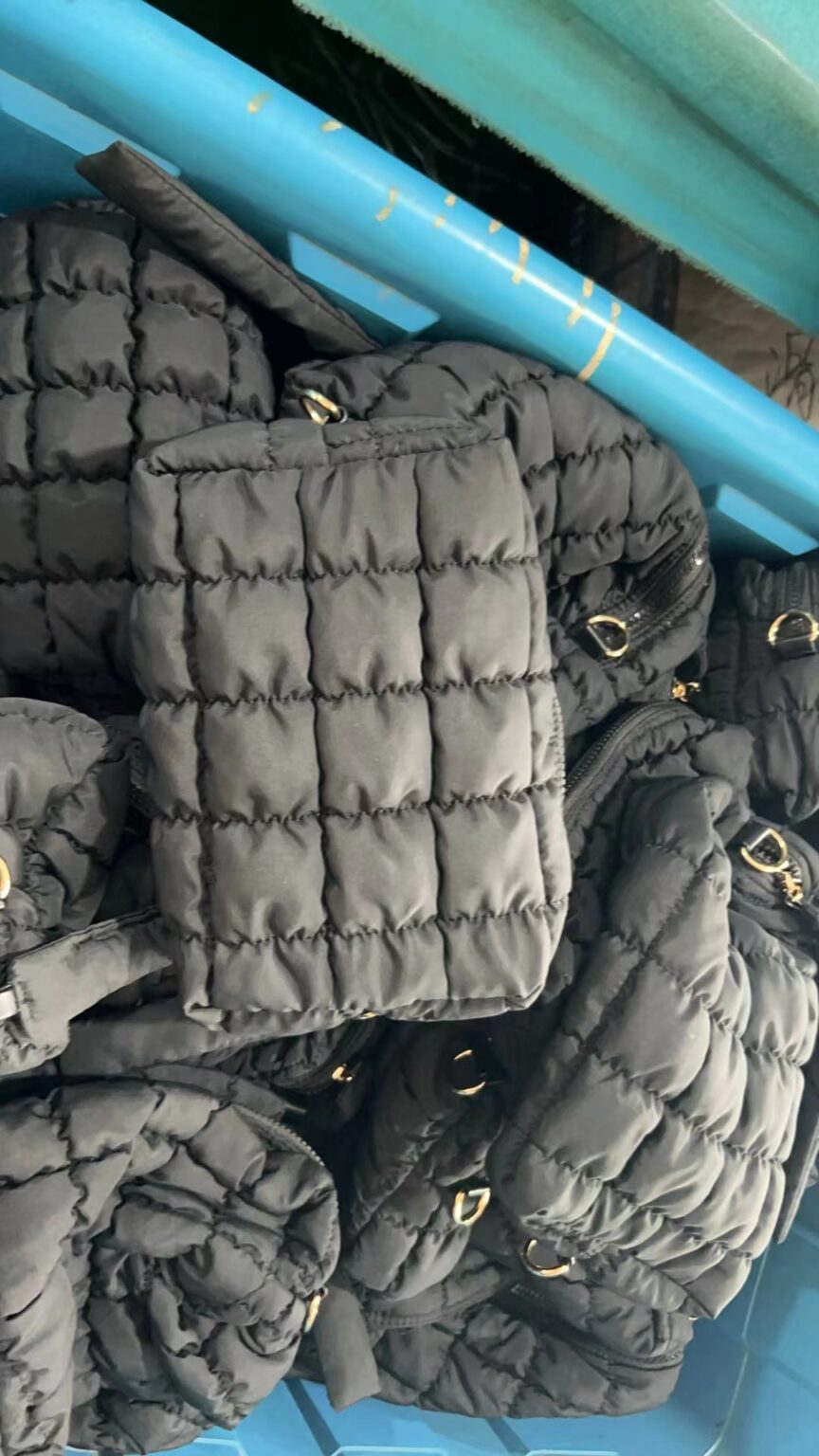
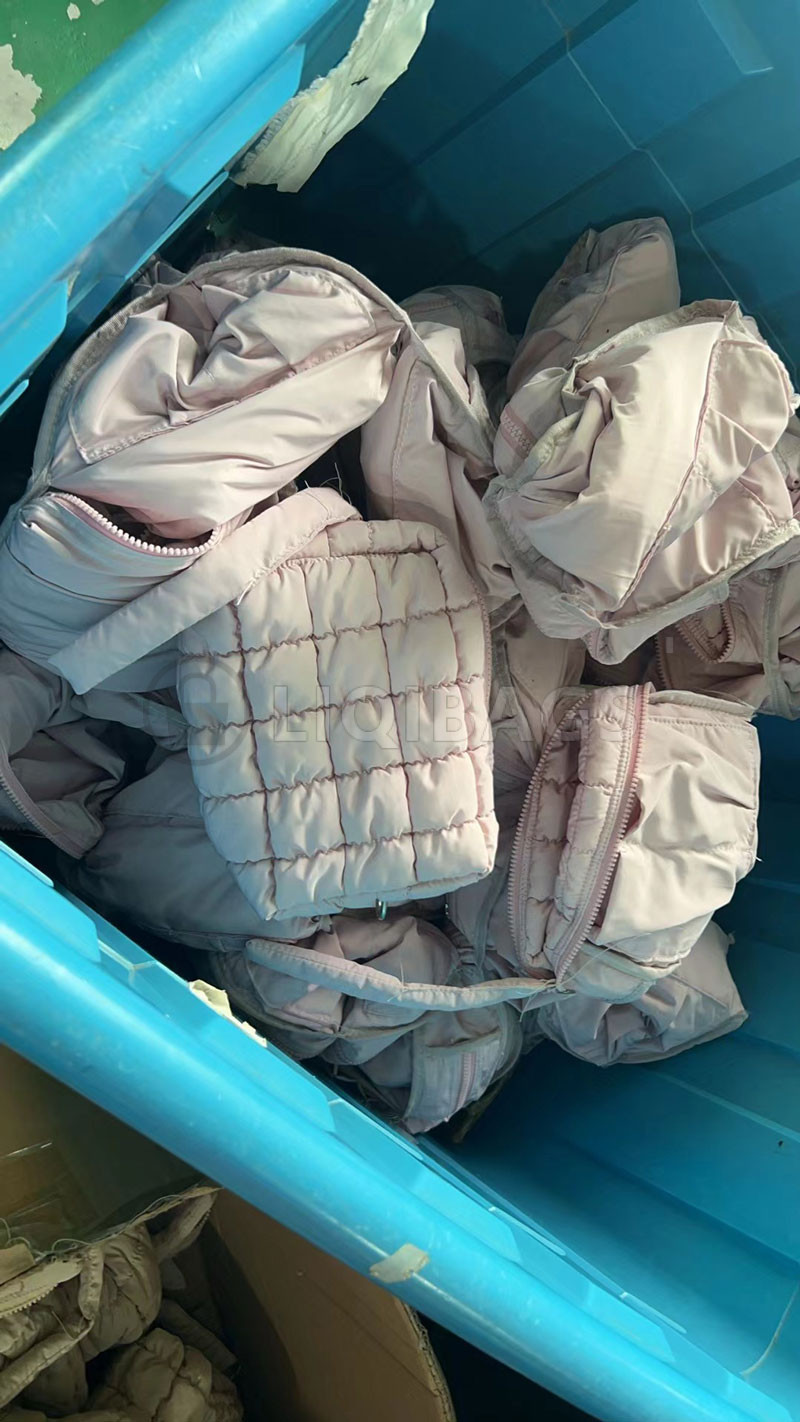
Real production examples: quilted zip pouches
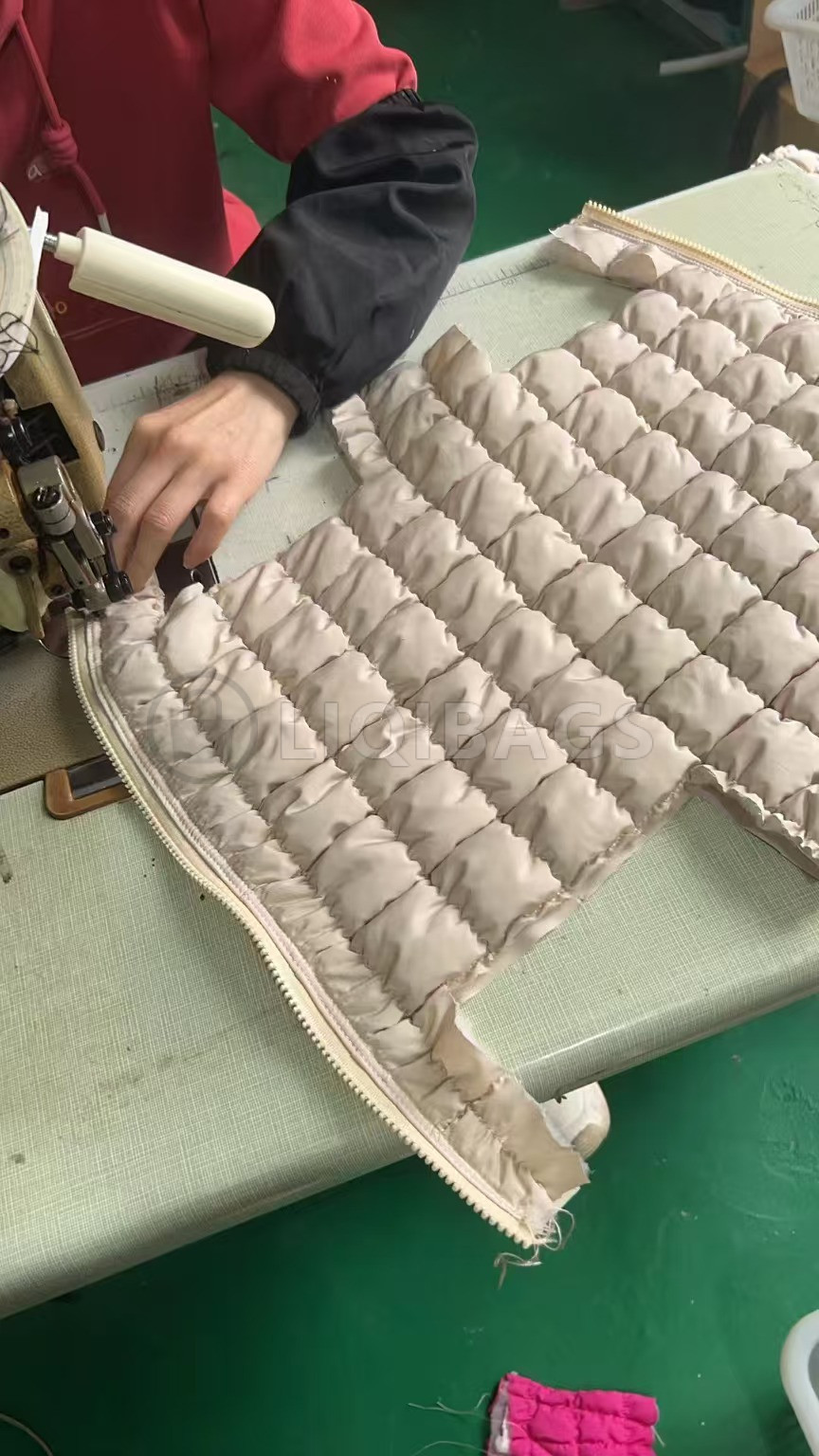
These two Liqibag case photos show quilted zip pouches during production. They are useful visual references for stitch layout, volume and zipper placement. The exact fiber content and finished-bag performance cannot be determined from the photos alone.
This workshop photo shows the zipper-edge sewing stage for a padded, puffer-style quilted cosmetic bag panel. The raised quilted texture is formed during construction; the image alone does not establish the exact filling composition.
Logo and decorative techniques
The reference designs use screen printing, digital direct printing, letter printing, raised printing, flock printing, embroidery, appliqué, embroidered labels, webbing, lace, beads, hotfix rhinestones and metal charms. Start with the artwork complexity, fabric surface and desired touch, then confirm placement, size, abrasion requirements and cost. A multicolor graphic may call for a digital-print discussion; a simple mark could be compared across print, woven label and embroidery. Raised print, flocking, beads and rhinestones need extra checks for touch, attachment and cleaning.
Use artwork and logos you own or are authorized to reproduce. Brand marks shown on design references must not be copied into production. Check logo placement on the physical sample with the bag open, closed and filled.
Seven details to include in a cosmetic-bag sample brief
- Use and contents: everyday, travel or gifting; list any bottles, brushes or compacts.
- Target shape and dimensions: give a reference bag or exact width, height and depth.
- Exterior and lining: request fiber composition, fabric weight or thickness, swatches and color options.
- Openings and pockets: define zipper or drawstring, mesh sections, handle and hardware.
- Artwork: provide logo files, placement, size, colors and usage rights.
- Performance requests: agree how easy-clean, abrasion or water-resistance requirements will be tested.
- Order requirements: quantity, sample, packaging, target budget and schedule for quotation.
Frequently asked questions
Is nylon or PU better for a custom cosmetic bag?
Start with nylon swatches if lightweight textile styling matters; look at PU samples if a leather-look finish and structure matter more. Compare the exact material, lining, hardware and finished sample. Neither name alone proves better durability or water resistance.
Can denim or satin be used for a makeup pouch?
Both can be design candidates. Denim brings visible texture; satin brings a soft sheen. Check color transfer, snagging, cleaning and the chosen lining during sampling.
Where does mesh work best?
Mesh is a useful option for visible internal pockets or dividers. Choose opening size and stretch around the items stored. It does not replace a liquid-resistant liner.
What should I send a factory before requesting a quote?
Send the intended contents, reference shape, target dimensions, material and color direction, logo file, quantity and deadline. This gives the factory enough context to suggest a workable construction and a comparable quotation.
Developing a cosmetic-bag collection? Compare our nylon cosmetic bag, PU travel cosmetic pouch and mesh cosmetic organizer as shape references, then send Liqibag your desired size, material, artwork and quantity for sampling discussion.
 Custom Bible Bag Organizers & Bible Covers
 Backpacks & Drawstring Bags
 Cooler & Thermal Bags
 Cosmetic & Toiletry Bags
 Tote & Shopping Bags
 Tool, Medical & Equipment Bags
 Washable Kraft & Tyvek Bags
 Camera Bags & Photography Cases
 Crossbody & Shoulder Bags
 Pet Bags & Accessories
 Storage & Organizer Bags
 Travel & Duffel Bags