

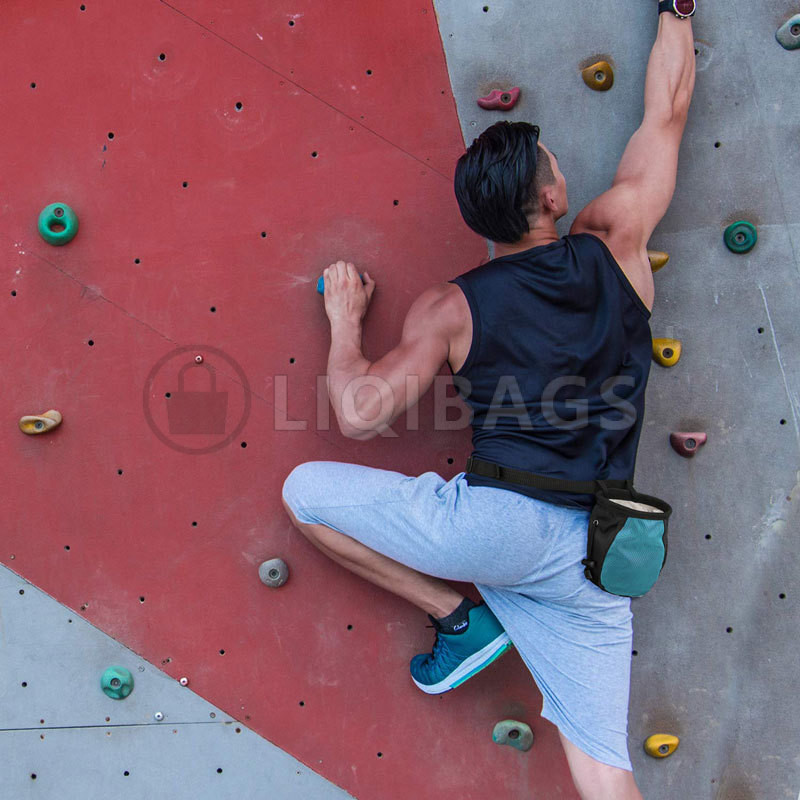
A chalk bag is an indispensable piece of core equipment in rock climbing. While retailers often list them simply as “accessories,” they play a critical role during a climb. When tackling complex routes and your hands start to sweat, an easy-to-reach chalk bag provides immediate slip-resistant support, helping you maintain your grip—which often makes the difference between losing a hold and moving upward.
I. Structure and Design Features
To meet the demands of extreme sports, standard climbing chalk bags typically feature the following core design elements:
- Exterior Material: Usually made from durable, abrasion-resistant materials like nylon to withstand the inevitable friction against rock walls and gear abuse.
- Inner Lining: Features a soft fleece lining. This material is not only comfortable but also helps soak up extra chalk dust.
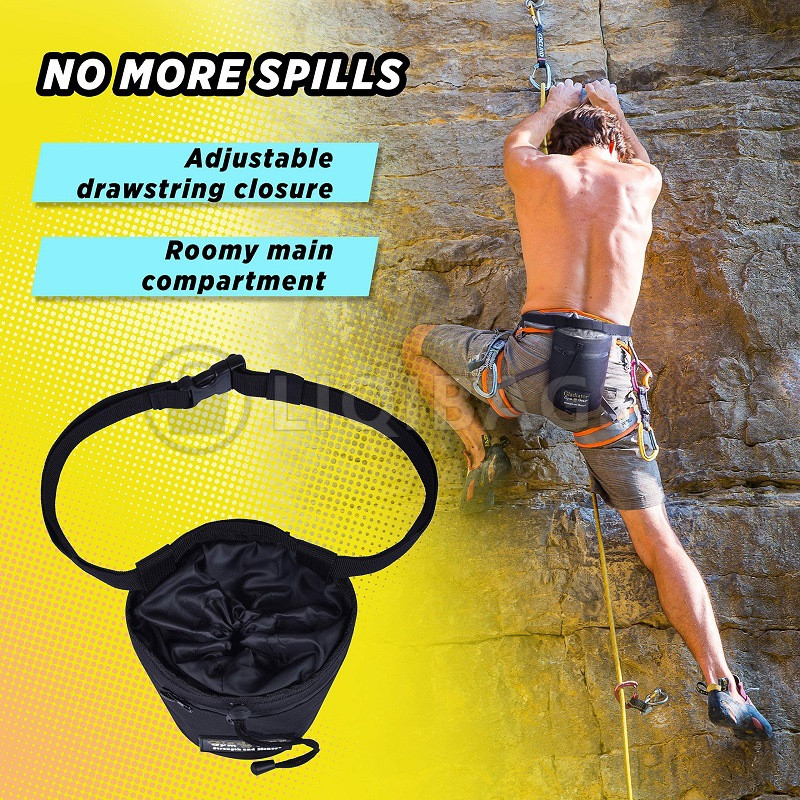
- Closure System: Equipped with a drawstring or zipper system to securely seal the bag when not in use, preventing the majority of chalk from escaping.
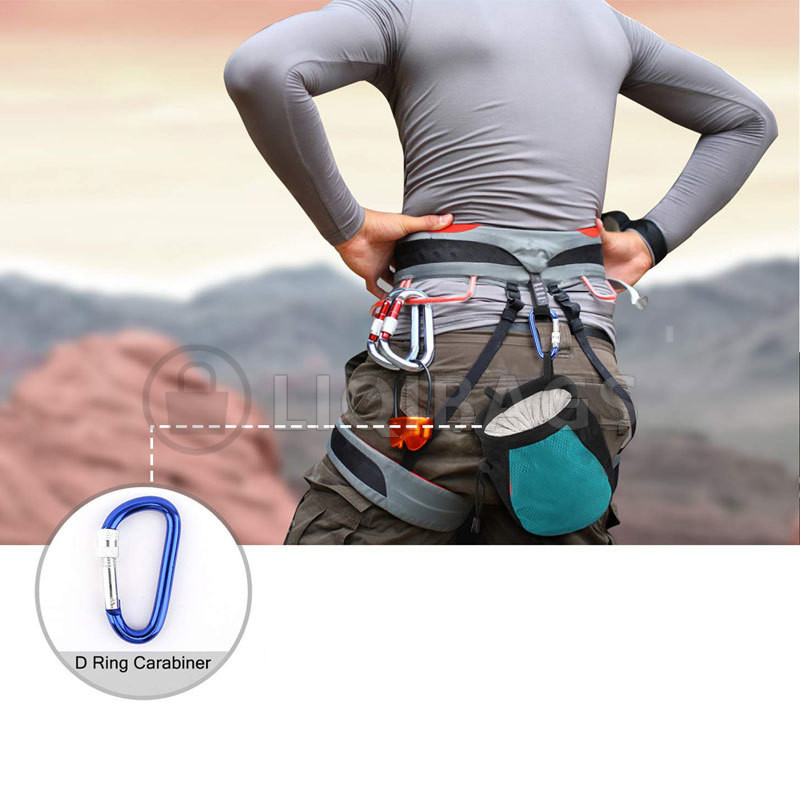
- Attachment System: Comes with a standard belt system for waist-level attachment. This keeps the bag secure and provides easy access, even when you are climbing perpendicular to the ground.
- Additional Features: Many modern bags also include brush holders, external zippered pockets for small items (like phones or keys), and removable waist belts.
II. Main Types and Variations
While collectively referred to as “chalk bags,” they are primarily divided into three categories based on usage scenarios and chalk application methods:
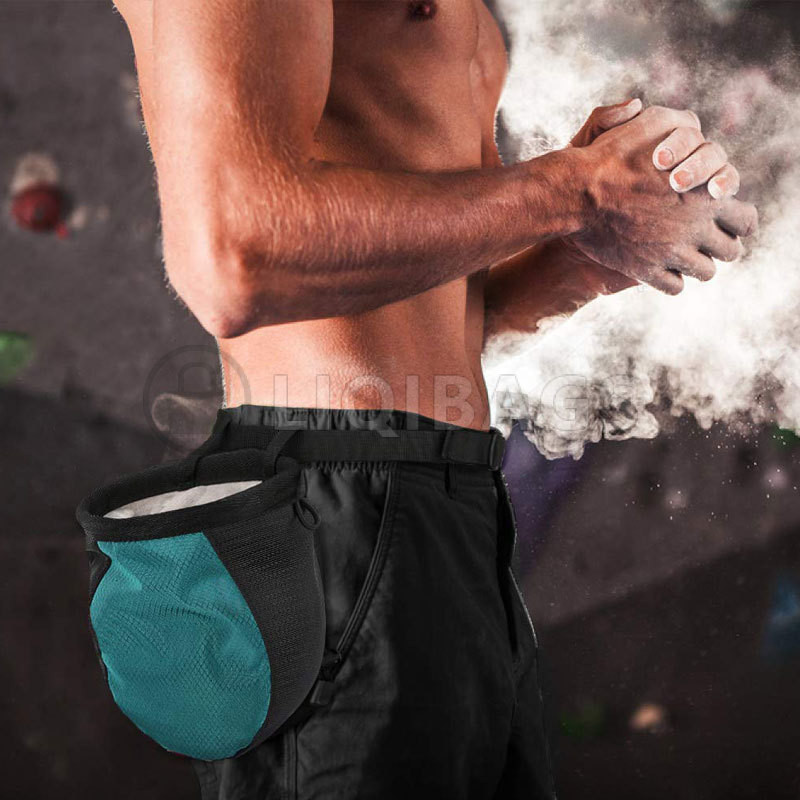
- Standard Chalk Bag This is the most common style, typically cylindrical or tapered. It features a rigid opening that holds its shape, allowing climbers easy, one-handed access to chalk mid-climb.
- Chalk Bucket Consider this the “grown-up” version of a chalk bag. It is much larger, deeper, and wider, designed to hold significantly more chalk. Unlike standard bags, chalk buckets are kept on the ground (typically for bouldering) and are not worn while climbing.
- Chalk Sock (Chalk Ball) A porous fabric pouch filled with loose chalk. It cannot be used on its own; instead, it must be placed inside a chalk bag or bucket. By patting or squeezing the ball, chalk dispenses evenly onto your hands. This design minimizes airborne dust and prevents excessive spillage.

III. Buying Criteria
When investing in a chalk bag, consider these five essential factors to find the best fit for your needs:
- Size & Shape: Choose based on your hand size and climbing preferences. Larger hands require a wider mouth, while tapered bags can help smoothly guide your hand into the chalk.
- Durability: Rock climbing is a rugged sport. A quality bag must have a tough exterior shell paired with a soft, dust-gathering interior lining.
- Technical Features: Evaluate based on personal habits, such as needing a zippered pocket for a phone or specific attachment points.
- Price: Chalk bags span a wide range of prices, allowing you to choose one that fits your budget without overspending.
- Style: While aesthetics do not impact performance, many brands (like 8Bplus) offer fun, humorous designs (such as monster faces) to add personality to your climbing gear.
IV. Usage and Tips
- Filling the Bag: Pour loose chalk directly into the interior of the chalk bag (the fleece lining is designed exactly for this). If using block chalk, break it up into your preferred consistency inside a sealed plastic bag or inside the chalk bag itself to minimize dust clouds.
- Application: Whenever you need extra grip during a climb, simply dip your hand into the bag. If you are using a chalk sock, roll or squeeze the sock to dispense the chalk.
- Advanced Combinations: Many experienced climbers use a “hybrid method”—applying liquid chalk as a base layer first, and then adding dry chalk dust on top for maximum, long-lasting grip.
 Bible Case & Bible Covers
 Backpacks & Drawstring Bags
 Cooler & Thermal Bags
 Cosmetic & Toiletry Bags
 Tote & Shopping Bags
 Tool, Medical & Equipment Bags
 Washable Kraft & Tyvek Bags
 Camera Bags & Photography Cases
 Pet Bags & Accessories
 Storage & Organizer Bags
 Travel & Duffel Bags